

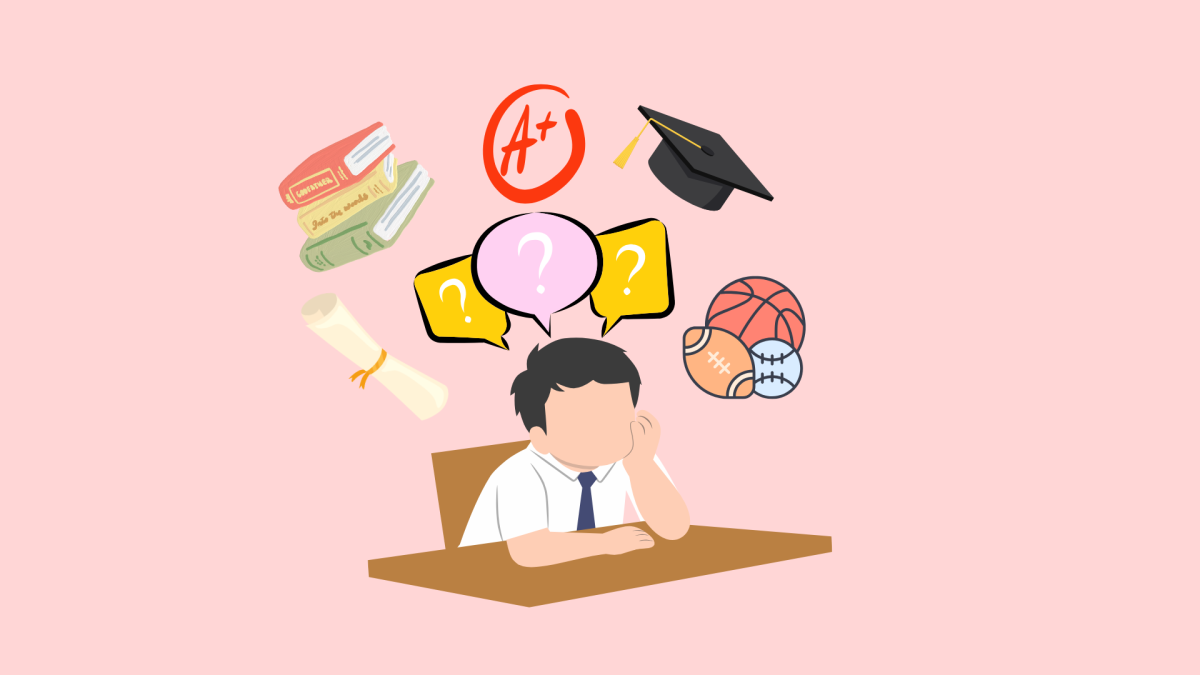
As course selection for my senior year draws closer, I can’t help but look back on how I’ve managed to navigate my past three years of high school – and how I’ve had to do it completely on my own.
Despite being promoted as a key resource for students planning out their academic and professional careers, the guidance system at EHS has persisted in being almost entirely inaccessible.
The first time I felt failed by guidance was in eighth grade, when students were instructed to begin course selection for their first year of high school.
At 13, this concept terrified me, but I at least was slightly comforted. Students were told that we would have the opportunity to meet with our future guidance counselors to discuss our academic paths and apply for courses.
When the time came, however, we were assigned to random counselors. There was no conversation at all, let alone one regarding my future at EHS. I simply handed the counselor a sheet with my classes, and she entered them into a computer.
I now understand the need for efficiency; these women must have had a million other things to do and a million other students to get through. But I was counting on this future-determining conversation I thought I’d have with my counselor.
Since starting high school, I have only continued to feel neglected by the guidance system.
After my first college visit last year, I learned that I’d have to submit a letter of recommendation from my guidance counselor for many college applications. As someone who had never exchanged a word with theirs, I was confused.
What I didn’t realize was students at other high schools actually talk with their guidance counselors regularly in scheduled meetings that they aren’t left to seek out themselves.
This revelation prompted me, someone who was nearly halfway done with high school at the time, to take action towards meeting my guidance counselor for the first time.
I first filled out a green slip in the guidance office, as students are supposed to do, and waited hopefully to be called down one day to have a discussion. That day never came.
Next, I decided to go for a more direct and personal approach: sending my guidance counselor a Schoology message, explaining to her the lack of response I got from my previous attempt and asking when the best time to meet with her would be. Once again, I was ignored.
The only instance in which I had a resemblance of a real conversation with my guidance counselors was not about my goals, interests, or future career plans, but a scheduling conflict.
During the study period for one of my second semester finals, I was called down to the guidance office and greeted by a guidance counselor – but not my guidance counselor, of course – asking me to choose between two conflicting classes: Honors Journalism and AP Chemistry
I was appalled. Here was my first in-person interaction with guidance, maybe 10 minutes before going into a final exam, and I was being asked to choose between two classes on the spot? And these weren’t just any two core classes; these are classes that I meticulously planned for and placed into my schedule months ago.
These experiences aren’t simply minor inconveniences. They reveal a guidance system that, despite its promises, leaves students to navigate high school and plan for their futures on their own. The lack of proactiveness and intervention in students’ academic careers is bound to leave students guessing on what the best decisions are.
And this lack of direction causes not only stress, but also inequality.
Not all students have access to the thousands of dollars that out-of-school college counseling requires. Not all students have knowledgeable older siblings or even parents who went to college themselves. Students without these advantages can only be left behind.
I am able to recognize that this is no fault of the guidance counselors themselves; I’m sure they are overbooked and burdened with too many tasks at once. With hundreds of students each, they are bound to be unreachable at times. The problem is systemic.
I see the efforts being made, and I commend them. This year, a new guidance counselor position with a college focus was introduced. This could potentially help many students who have previously had no access to the guidance office.
EHS needs a guidance system that is proactive, not passive. Students shouldn’t have to chase down those who are here to help them, and counselors should have conversations more meaningful than quick schedule fixes.
Counselors deserve the time, staffing and support to help students because now, many of us are toughing it out alone.
As I look forward to senior year, I wonder if things will change for me. I wonder if I will ever meet with my guidance counselor. I certainly hope I will, but I can’t say that my hopes are high.