

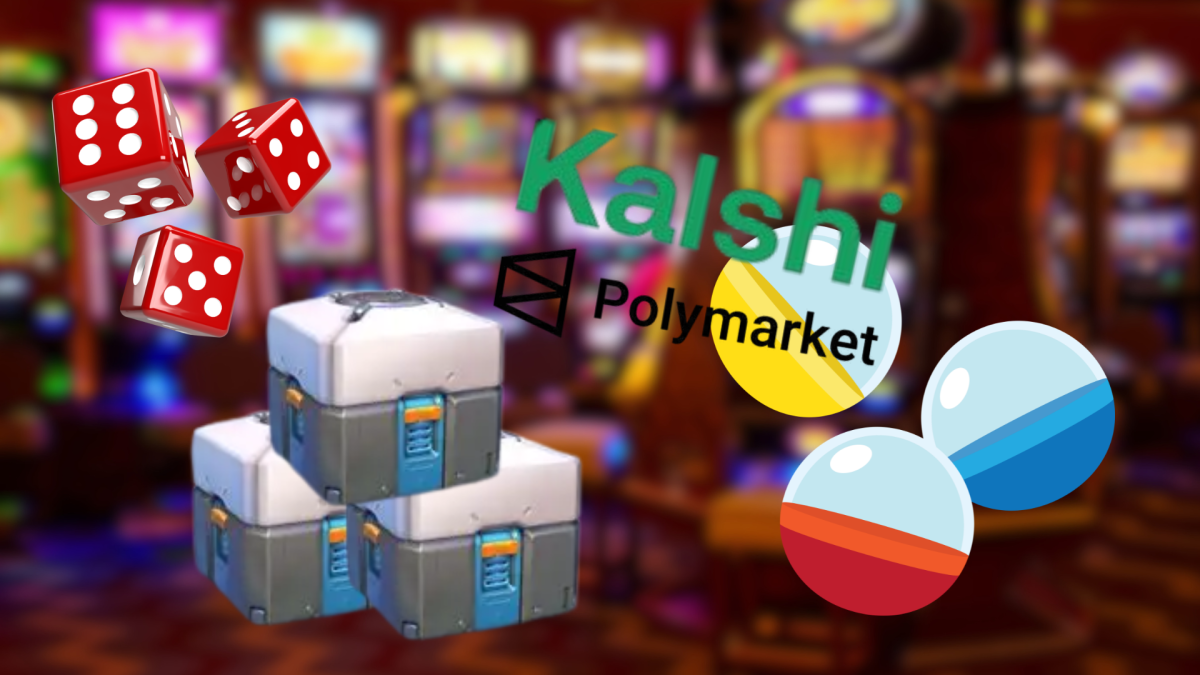
Gambling used to be the classic way to lose all your money rather than the modern method
which is buying a full tank of gas.
It’s since lost its allure, and many would-be losers have gone to other means to give the house
all of their cash.
Loot boxes are items that players can buy in video games that usually can either directly or
indirectly be financed through real life currency.
These loot boxes could give in-game currency, cosmetics, upgrades or whatever the developers feel like stuffing into them.
There are no guarantees at all that a loot box gives you the best reward even after opening
1000 of them. Some games like “Genshin Impact” or “Zenless Zone Zero” have “pity” systems
that eventually will give you a decent reward or a currency to spend on the contents, but those
“pity” systems are based off of the gambling systems.
These games are commonly referred to as “gacha games,” which comes from the shortening of
gachapon containers which are much more popular in Japan. The best American analogue
would be the machines you put 75 cents into and then spin around to get a random thing in a
container.
Now imagine that instead of spending 75 cents for a small little trinket you can pay $12.99 plus
tax to get a digital currency to potentially luck into buying a fictional character. That’s the entire
business model of gacha games.
Gacha games aren’t just fringe things that barely break ground in the U.S. either, as they have
received nominations for and even won at The Game Awards. “Honkai: Star Rail” and won Best Mobile Game and both “Genshin Impact” and “Wuthering Waves” have won Players’ Choice.
These games are free and support themselves with quite frankly abysmal monetization methods
that prey on vulnerable people and children who do not know any better about spending money
on them.
Loot boxes are still a type of gambling, and one without any kind of payoff at that. The only
singular objective upside of gambling is the fact that you could potentially make money, and in
many of these games you will never make a penny.
This entire business model disgusts me and I think that the gaming industry has been allowed to
get away with this for far too long and at far too massive a scale.
While I do think that there is a responsibility for every parent to teach their children about the
importance of good spending habits and about the value of money, kids don’t know better. The
companies doing these things will not cease until they are stopped by intentional regulatory
action.
Likely just as much regulatory action will be needed to stop the onslaught prediction markets are
forcing through.
Kalshi and Polymarket are hosting bets over everything from the hantavirus to DiCaprio dating
timelines and there’s seemingly no point to it.
I do not want to gamble on whether an elected official says a key buzzword. I do not want to
gamble on if a famous actor dies before 2027. I do not want to gamble on which AI company
declares insolvency first.
The obsession with the gamification of every single individual and minute event we live through
is just so, so tiring.
What point is there to betting on something when someone can dump cash in and then thumb
the scale to get a payout? What point is there to gambling on an outcome that can be fixed to
have no competitive odds? What’s the point of any of this?
Casinos had a clear boundary. You cross the threshold and enter the land of slot machines and
stacked card tables. And you could cross the other way and leave it all behind.
You couldn’t take the casino with you in your pocket and use it to profit off of an international
incident. The casino didn’t offer you a blind box full of digital characters.
We need to stop treating this like it is a normal thing. Casinos were destructive forces for
thousands before and now they’re turbocharged and on every app store.
Gambling is a vice. Gambling is a “sin.” Gambling is addictive. Gambling is generally adverse to
your health. All because it’s fun.
It’s fun to watch the roulette wheel go around and hit 17 black for the third consecutive time. It’s
fun to see your chosen horse win with long odds. It’s fun to scratch off a scratcher and see you
won something, even if that is just $1. The fun we derive from gambling is real, but we cannot allow it to pollute our society any further than it already has.